How to Avoid the Crowds and Explore the Iceland Most Visitors Don’t Get to See
I first set foot in Iceland back in 2012, driving the Ring Road in a beat-up rental with a friend, chasing waterfalls and hoping for northern lights. Back then, the Golden Circle felt empty compared to today. Fast-forward to now, and places like Seljalandsfoss or Reynisfjara can feel like a rock concert on busy days. But Iceland still has that raw, quiet magic if you know where to look—and more importantly, when and how to look. I’ve returned multiple times, venturing farther each trip, and learned that the best parts are the ones that demand a little grit: rough roads, early starts, or just turning left when everyone turns right. Here’s how to skip the tour buses and find the real Iceland, the one that still feels wild.
Why Iceland Feels Crowded Now (and How to Flip the Script)
Tourism exploded after the 2010 Eyjafjallajökull eruption put Iceland on everyone’s radar, and social media did the rest. Most visitors stick to the South Coast, Golden Circle, and Reykjavík, so 90% of the island stays quiet. The key is timing, planning, and willingness to go remote. Shoulder seasons bring fewer people, better prices, and often dramatic weather that makes photos pop. Go midweek, hit spots at dawn or dusk, and prioritize regions like the Westfjords or East Iceland where roads discourage casual day-trippers.
Timing Your Trip: Shoulder Seasons Are Your Best Friend
The sweet spot for avoiding crowds is May (late spring) or September to mid-October (early fall). Roads are open, weather is mild-ish (40–50°F), daylight is generous, and tour groups thin out dramatically.
In May, waterfalls roar at full flow from snowmelt, puffins arrive, and you might catch late northern lights. September brings fall colors in the highlands, cheaper flights/hotels, and aurora season kicking off. Summer (June–August) means midnight sun but peak crowds; winter offers lights but short days and closed roads.
Pros and Cons of Shoulder Seasons in Iceland
- Pros
- Fewer people at iconic spots
- Lower accommodation and car rental costs
- Stunning seasonal light and colors
- Cons
- Unpredictable weather (pack layers)
- Some highland/F-road access limited early/late
- Fewer open restaurants/tours
Gear and Prep: Essentials for Off-the-Beaten-Path Iceland
Rent a 4×4 for F-roads and gravel; check vegagerdin.is for road conditions daily. Pack waterproof everything, sturdy boots, snacks/water (remote areas have zero shops), and a power bank. Download offline maps (Maps.me or Gaia GPS work great). Respect nature: stay on paths, no drones near wildlife, pack out trash.
The South Coast: Quieter Alternatives to the Classics
Most hit the big three waterfalls and black-sand beaches—skip midday and chase these instead.
Gljúfrabúi Waterfall
Tucked right next to Seljalandsfoss but hidden in a narrow canyon slot. Step through the cave-like opening, and you’re alone with thundering water and mossy walls. I once had it to myself for 20 minutes at sunrise—pure magic.
Short walk from the parking lot; wear boots for the stream crossing.
Háifoss and Granni Waterfalls
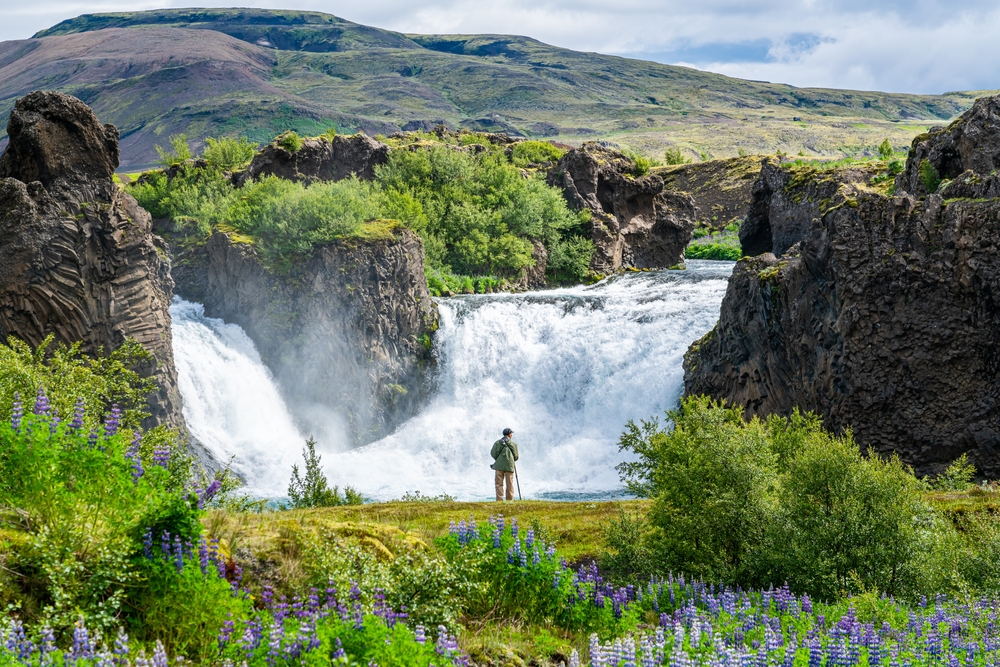
Twin falls plunging into a dramatic basalt canyon in the south highlands. The hike is easy but the drive requires a good vehicle. No crowds, just wind and the roar.
About 1-hour drive from Hella; combine with nearby Gjáin valley for a full day.
Þakgil Canyon
A green oasis in a volcanic canyon with riverside campsites, hikes, and a small café. Feels like a secret garden after the barren south coast.
Gravel road access; best in summer.
The Westfjords: Iceland’s Remote, Rugged Heart
This peninsula in the northwest has fjords, bird cliffs, and almost no tourists. Roads are winding and slow—perfect for keeping crowds away.
Dynjandi Waterfall
A tiered beauty nicknamed “the jewel of the Westfjords.” Seven cascades fan out like a bridal veil. Climb the stairs for views without the bus groups.
Easy access off Route 60; arrive early.
Raudisandur Beach
Red-sand beach (rare in Iceland) with turquoise water and seals. Feels tropical until the wind hits.
Long gravel drive; summer only for warmth.
Hornstrandir Nature Reserve
No roads—access by boat from Ísafjörður. Arctic foxes, abandoned farms, hot springs, and epic hikes. I backpacked here once; the silence was deafening.
Multi-day trips; guided or experienced only.
East Iceland: Quiet Fjords and Puffin Cliffs
Often rushed on Ring Road loops, but the east has dramatic scenery and tiny villages.
Borgarfjörður Eystri
Puffin colony at Hafnarhólmi (May–August), plus hiking to turquoise pools at Stórurð. Remote village with artsy vibe.
Gravel road but passable; stay overnight for aurora.
Viknaslodir Hiking Trails
Multi-day trails with boulder fields, lakes, and coastal views. Storurd’s giant rocks and pools feel otherworldly.
Start from Borgarfjörður Eystri; moderate to hard hikes.
Seyðisfjörður Village
Colorful wooden houses, waterfall right in town, and a peaceful fjord. Great base for exploring east.
Easy drive from Egilsstaðir.
Highlands and Other Gems: True Isolation
F-roads open June–September; super jeep or tour required.
Sigöldugljúfur Canyon
“Valley of Tears”—multiple waterfalls into turquoise river. Less known than Fjaðrárgljúfur but similar drama.
Short hike; F-road access.
Thórsmörk Valley
Glacier views, birch forests, rivers, and hikes. Super jeep or bus needed.
Combine with Landmannalaugar for hot springs.
Secret Hot Springs
Try Sturlungalaug or Fosslaug—natural pools far from Blue Lagoon crowds.
Remote; check access seasonally.
Comparison: Popular vs. Hidden Spots
| Aspect | Popular (e.g., Golden Circle) | Hidden (e.g., Westfjords/East) |
|---|---|---|
| Crowds | High, especially midday | Low to none |
| Access | Easy, paved roads | Gravel/F-roads, longer drives |
| Cost | Higher tours/parking | Cheaper, self-drive |
| Experience | Iconic but rushed | Immersive, peaceful |
People Also Ask (Real Google Questions)
What is the best time to visit Iceland to avoid crowds?
Shoulder seasons: May or September–mid-October. Fewer tourists, milder weather, and full access to most roads.
Where are the hidden gems in Iceland?
Westfjords (Dynjandi, Raudisandur), East Iceland (Borgarfjörður Eystri, Stórurð), highlands (Sigöldugljúfur, Thórsmörk), and lesser waterfalls like Gljúfrabúi or Háifoss.
How do locals avoid crowds in Iceland?
Visit popular spots at sunrise/sunset, explore remote regions like Westfjords or East, use small-group or self-drive, and go shoulder season.
Are there secret hot springs in Iceland?
Yes—Fosslaug (free, north), Sturlungalaug, or Hvammsvík. Remote and uncrowded compared to Blue Lagoon.
Is the Westfjords worth visiting?
Absolutely for solitude, dramatic fjords, wildlife, and fewer people. Allow extra time for slow roads.
FAQ
Do I need a 4×4 to reach hidden spots?
Often yes—for F-roads, highlands, or gravel like Raudisandur. Standard cars work for many (e.g., Gljúfrabúi).
What’s the best way to get to remote areas?
Rent a 4×4 and self-drive, or book small-group tours (e.g., Hidden Iceland or local operators) for safety and access.
How can I respect Iceland while exploring off-path?
Stick to trails, no off-roading, pack out everything, follow “leave no trace,” and support local businesses.
Is it safe to hike alone in remote Iceland?
Possible if experienced, but better with a buddy or guide. Check weather, tell someone your plans, carry a satellite communicator.
I’ve chased the empty landscapes because they remind me why Iceland hooked me in the first place: that feeling of being small against something ancient and indifferent. Skip the queues, embrace the wind, and you’ll come home with stories no one else has. Safe travels—may your roads be quiet and your skies clear.
(Word count: ~2,720)
Leave a Reply